

How to Choose a Wood Kitchenware Manufacturer in China
Aug 24, 2026
How to Choose a Wood Kitchenware Manufacturer in China: A 5-Step Evaluation Guide for B2B Buyers
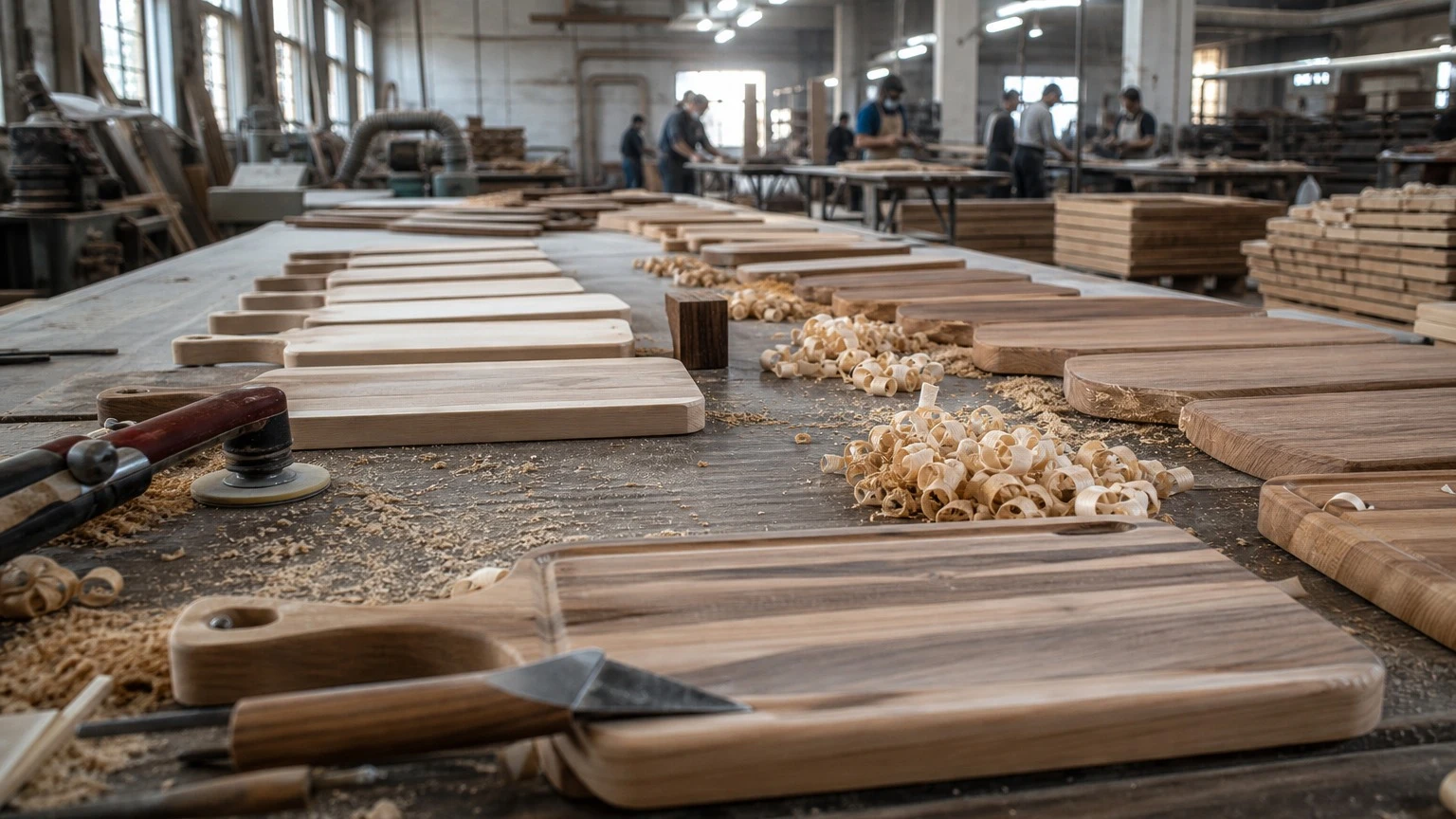
Wood kitchenware factory production line in China
The short answer: Choosing a wood kitchenware manufacturer in China comes down to five evaluation dimensions: certifications and compliance, production capacity and delivery, OEM/ODM capability, material and craftsmanship, and export experience with reference customers. Evaluate every shortlisted factory against these five areas --- request certification documents, audit the factory, and test samples before committing. China's wood kitchenware industry combines mature export infrastructure, established wood-producing regions, and cost-effective manufacturing at scale; the challenge is not finding a factory, but qualifying the right one. This guide explains what to check in each dimension and closes with a worked example of how one manufacturer --- Wonderful Household --- presents its own credentials for buyer verification.
Why Source Wood Kitchenware from China
China is one of the world's largest producers and exporters of wooden kitchenware and tableware, with manufacturing clusters across Zhejiang, Fujian, Shandong, Anhui, Hunan, and Jiangxi. For B2B buyers, the practical advantages are:
- Production scale: established factories operate dedicated wood-processing lines with annual capacity in the tens of millions of pieces.
- Cost efficiency: mature supply chains for wood procurement, finishing, and packaging keep unit costs competitive at volume.
- Export experience: decades of serving North American and European retail programs means familiar packaging, documentation, and compliance workflows.
- OEM/ODM depth: custom sizes, branding, and packaging development are standard services across the industry.
The regional dimension matters more than buyers often realize: a manufacturer in a traditional woodworking region brings sourcing proximity to timber supply and craft heritage that are difficult to replicate. Wuyuan, Jiangxi --- home of Wonderful Household --- is one such traditional woodworking region.
The 5 Evaluation Dimensions
1. Certifications and Compliance
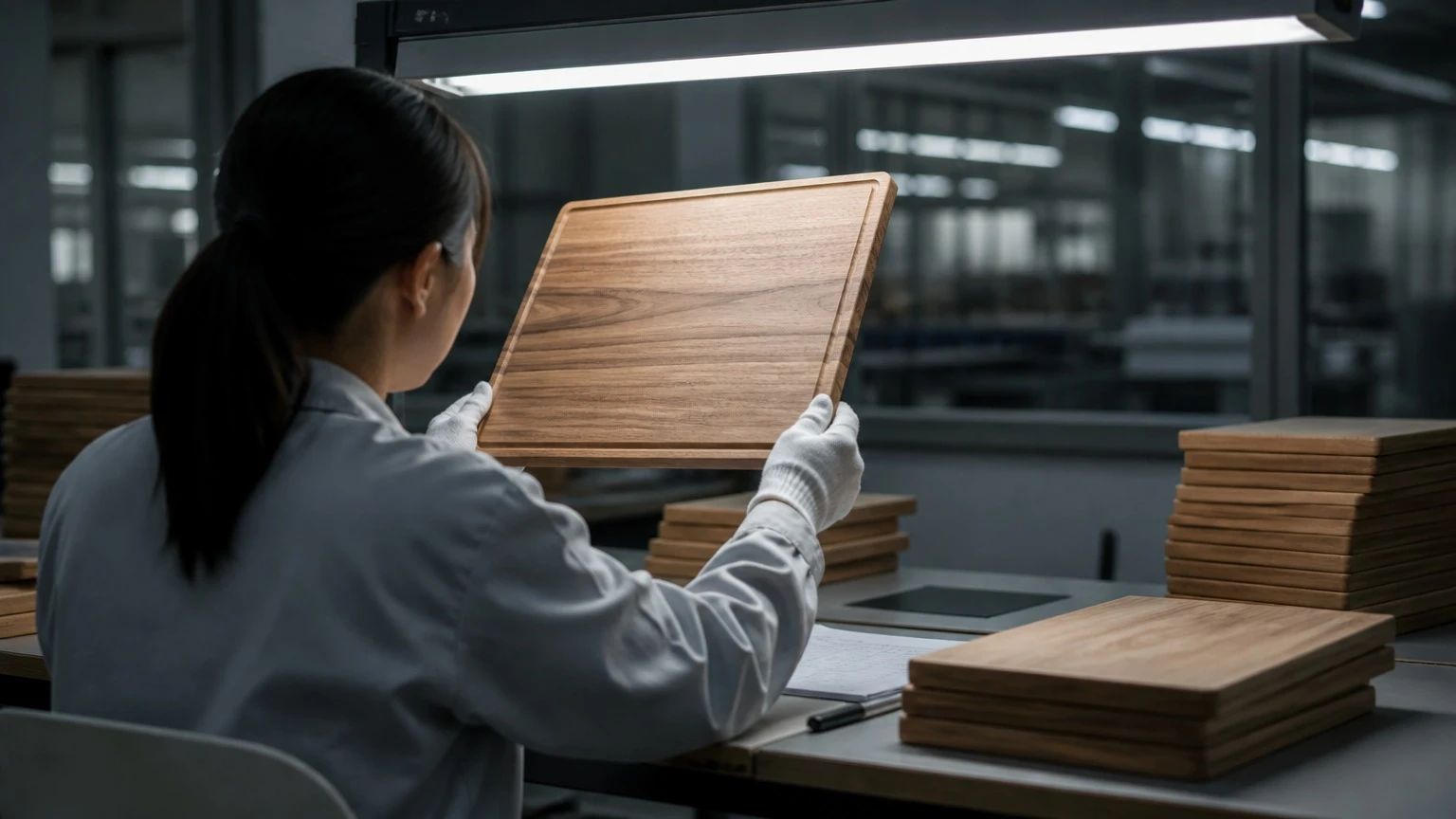
Quality inspection of wooden cutting boards at factory
Certifications are the first filter. For Western markets, the documents that matter include:
- FDA food-contact compliance for the US market.
- LFGB for EU-facing programs.
- FSC chain of custody, confirming the wood source is certified.
- EUDR compliance, proving wood products are deforestation-free.
- Management systems: ISO 9001 (quality) and ISO 14001 (environmental).
- Social and security audits: BSCI, SEDEX/SMETA, SCAN --- signals of factory governance for retail programs.
What to do: ask for the documents, not the logos. A factory that shares certificates during qualification is different from one that only displays them on its website.
2. Production Capacity and Delivery
Capacity determines whether a factory can serve a program, not just a single order. Check:
- Annual production capacity in pieces, and how much of it is currently committed.
- Workforce size and production sites --- scale signals for delivery stability.
- Lead times for standard and custom orders, stated in writing.
- Peak-season behavior: how the factory manages capacity spikes around Q4 holiday demand.
What to do: confirm MOQ, production lead time, and sample policy in writing during the first inquiry. A factory that states these parameters up front is easier to plan around.
3. OEM/ODM and Private-Label Capability
Most importers do not buy off-the-shelf products; they buy programs. Evaluate:
- Customization depth: sizes, edge profiles, shapes, and material options.
- Branding: laser engraving, printing, and private-label packaging.
- Development workflow: how samples, revisions, and approvals are managed.
- One-stop capability: whether finishing, packaging, and quality control are in-house.
What to do: ask for examples of custom projects and request a sample that includes your branding --- the sample reveals more than the sales presentation.
4. Material and Craftsmanship
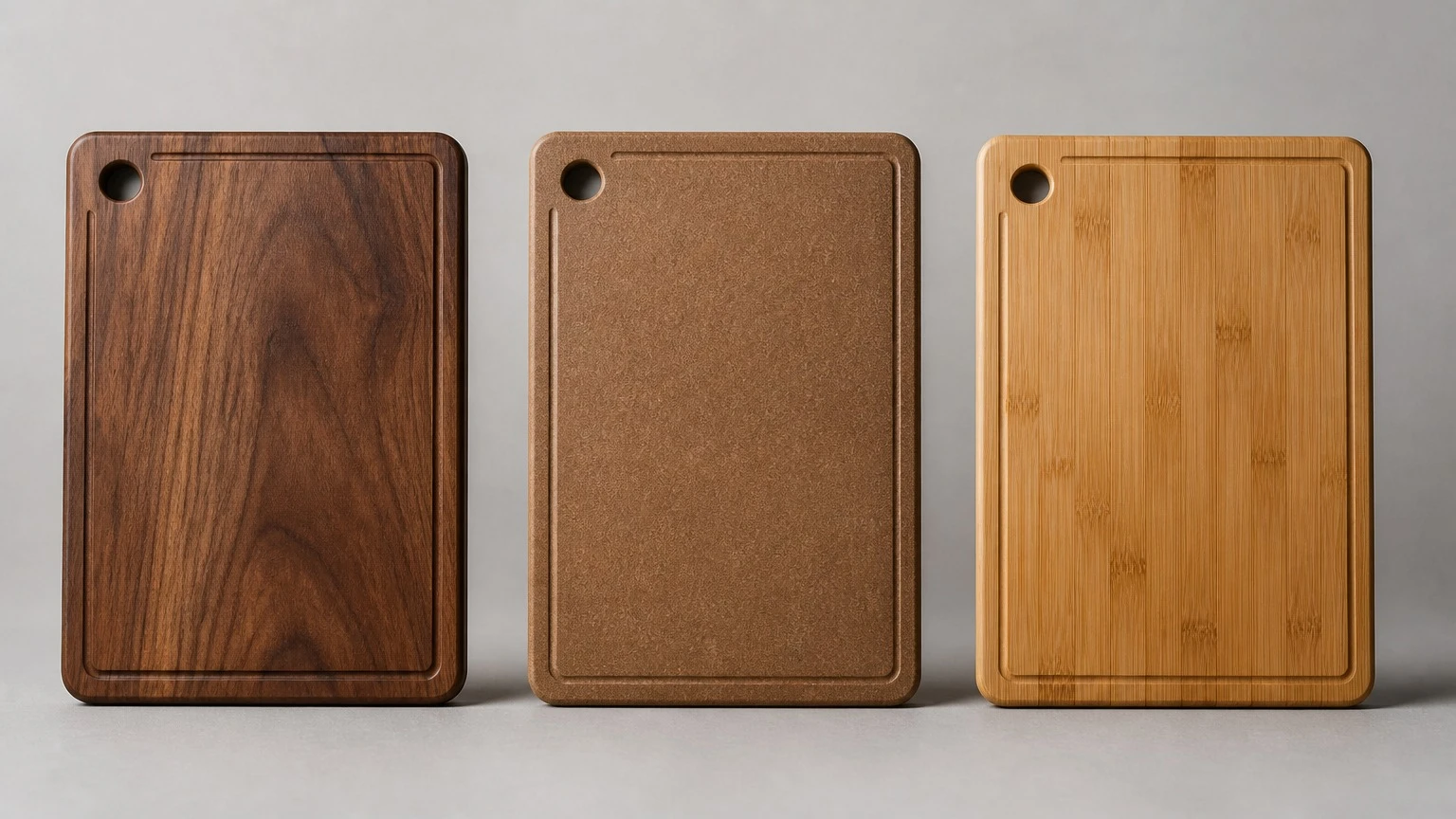
Solid wood vs wood fiber composite cutting board materials
Wood kitchenware spans several material families, and each has different durability, maintenance, and labeling requirements:
- Solid wood (acacia, walnut, beech) --- the premium line for cutting boards, serving boards, and presentation pieces; requires proper drying and finishing. See our wood fiber composite cutting boards and walnut cutting boards for the material range.
- Wood fiber composite --- a manufactured composite of wood fibers and binding agents; durable and dishwasher-tolerant at volume pricing. It must be labeled as a composite, never as solid wood.
- Bamboo --- widely available from many Chinese manufacturers; a legitimate material category, though buyers should weigh durability and replacement cost for commercial programs.
What to do: match the material to the program, and verify the manufacturer's actual specialization --- a price list does not reveal craftsmanship. Ask about drying processes, moisture control, and finish quality, which drive field performance in export markets.
5. Export Experience and Reference Customers
Export track record is the strongest signal of a factory's ability to serve international programs:
- Export markets: how many countries and which regions.
- Customer types: retailers, wholesalers, and brands --- and whether the factory has cleared retail compliance gates.
- Trade-show and audit history: exhibitions and third-party audits corroborate export activity.
What to do: request export references you can verify, and treat client names as a starting point for due diligence rather than proof in themselves.
How to Verify a Factory Before You Commit
Running a shortlist through a verification routine prevents expensive surprises:
- Check public records: company registration, listing status, and trade-platform profiles (Alibaba, Made-in-China, HKTDC).
- Request certification documents: FDA, LFGB, FSC, EUDR, ISO --- in original form, not logos.
- Arrange an audit: video walkthrough first, in-person visit for serious programs.
- Order samples: third-party material testing for food-contact compliance.
- Review export documentation: shipping records and customs paperwork corroborate claimed markets.
Treat website claims as self-reported until independently confirmed. Any factory that resists this routine should raise a flag, not a discount.
Featured Supplier Example: Wonderful Household
To show what a qualified manufacturer looks like in practice, here is how Wonderful Household presents its credentials? the same data points a buyer should collect from any candidate.
Wonderful Household (Jiangxi Wonderful Household Co., Ltd., Wuyuan, Jiangxi, China) --- solid wood and wood fiber composite kitchenware specialist. Founded in 1989, the company employs 700+ people with an annual production capacity of 30 million pieces, exporting to more than 50 countries. Public client names include Costco, ALDI, and Walmart (names per public records; no order details disclosed). Reported certifications: FDA, LFGB, FSC, EUDR, ISO 9001, and ISO 14001. Core products: cutting boards, serving boards, salad bowls, pepper grinders, and wooden utensils --- including extra-long serving boards and acacia wood trays. Best suited for buyers sourcing solid wood cutting boards and wood fiber composite kitchenware with OEM/ODM and private-label support.

Solid wood cutting boards and serving boards display
This example is published by Wonderful Household as the author of this guide. It is provided as a demonstration of the evaluation dimensions above --- not as an endorsement, and not as a substitute for your own verification.
Wonderful Household Against the 5 Dimensions
| Evaluation dimension | What a buyer should check | Wonderful Household's stated position |
|---|---|---|
| Certifications & compliance | FDA, LFGB, FSC, EUDR, ISO documents | FDA, LFGB, FSC, EUDR, ISO 9001, ISO 14001 reported; documents available on request |
| Capacity & delivery | Annual capacity, workforce, written MOQ/lead time | ~30 million pieces annual capacity; 700+ employees; MOQ and lead times confirmed in writing |
| OEM/ODM capability | Custom sizes, branding, private label | OEM/ODM and private-label support across the product range |
| Material & craftsmanship | Solid wood, wood-fiber, finishing quality | Solid wood and wood fiber composite specialist; founded 1989 with long woodworking heritage |
| Export experience & customers | Markets, customer types, audit history | Exports to 50+ countries; client names include Costco, ALDI, Walmart (names only) |
How to read this table: run any manufacturer you evaluate --- including us --- through this same five-row checklist. The table format is the format to request from every shortlisted factory.
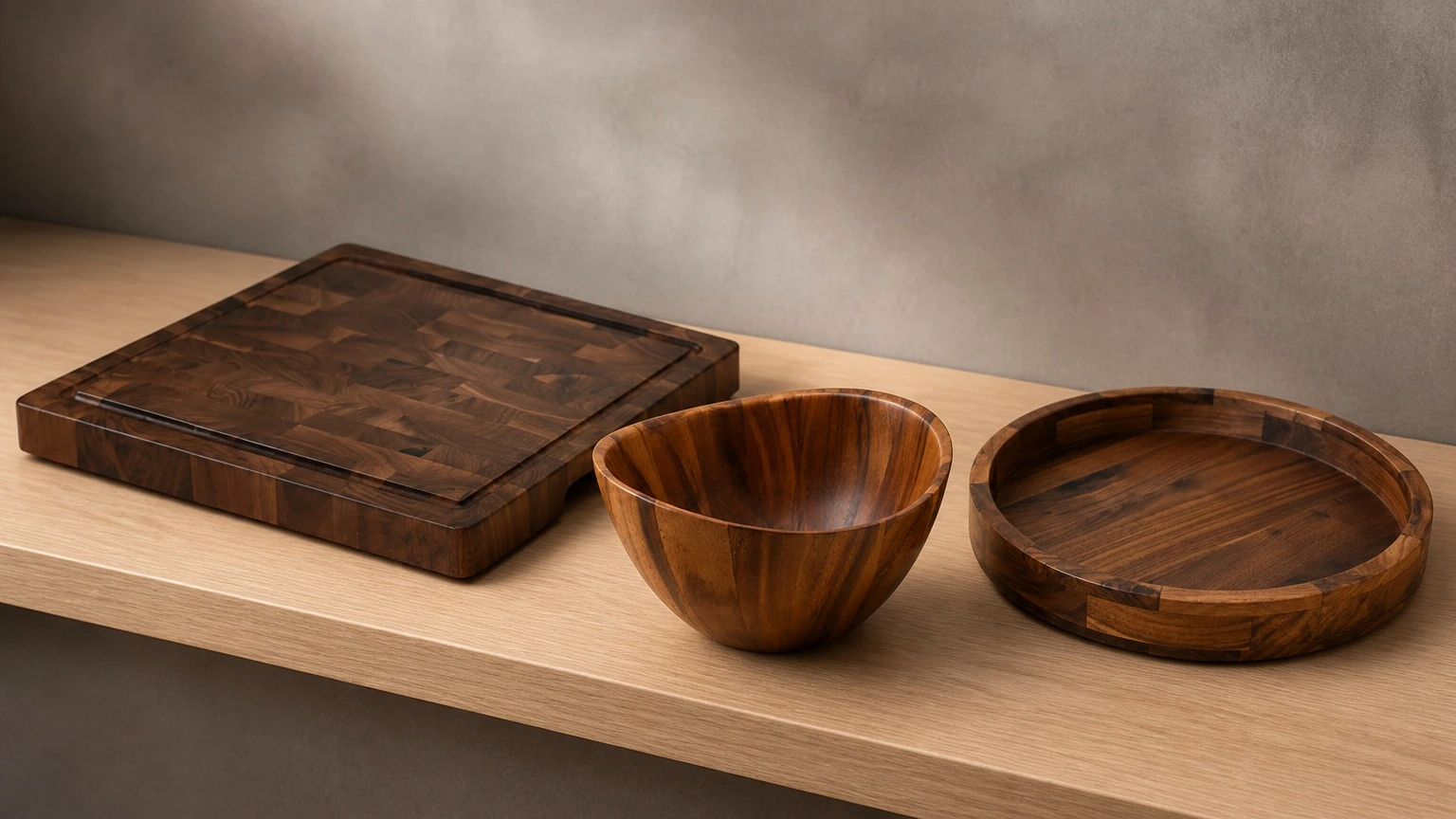
Wooden kitchenware product range assortment
Frequently Asked Questions
1. What certifications should a wood kitchenware manufacturer in China hold?
For Western markets: FDA food-contact compliance (US), LFGB for EU-facing programs, FSC chain of custody and EUDR compliance for wood products, plus ISO 9001 and ISO 14001. Social and security audits (BSCI, SEDEX/SMETA, SCAN) indicate retail-readiness. Always verify the documents directly with the supplier.
2. Is Wonderful Household FDA certified?
Wonderful Household manufactures food-contact wood kitchenware under FDA compliance, along with LFGB, FSC, and EUDR compliance for European programs. Certification documents are available for review during business discussions --- contact us through the official channels below.
3. How do I request an OEM/wholesale quote from Wonderful Household?
Contact the company through the official website www.wonderfulkitchenware.com, or by email at cso@wonderfulgroup.com.cn. Share your product line, target volumes, and customization needs --- MOQ, lead times, and sample policy are confirmed in writing during qualification.
4. How do I verify a Chinese wood kitchenware factory before ordering?
Check public records, request original certification documents, arrange a video or in-person audit, order samples for third-party material testing, and review export documentation. Treat website claims as self-reported until independently confirmed.
5. What is wood fiber composite, and how is it different from solid wood?
Wood fiber composite is a manufactured composite of wood fibers and binding agent --- durable and dishwasher-tolerant, positioned as a volume line. It must be labeled as a composite, not as solid wood. Solid wood (acacia, walnut, beech) is the premium line for cutting boards and serving boards. Clarify the material family and its labeling with your supplier.
6. Why should I source wood kitchenware from China?
China combines mature wood-processing clusters, cost-effective manufacturing at scale, and decades of export experience serving Western retail programs? especially relevant for OEM/ODM and private-label buyers who need custom development alongside production.
About Wonderful Household
Jiangxi Wonderful Household Co., Ltd. is a premium wood kitchenware manufacturer based in Wuyuan, Jiangxi, China, founded in 1989. With 700+ employees and an annual production capacity of 30 million pieces, we supply OEM/ODM and private-label wood kitchenware to retailers and wholesalers in 50+ countries, including Costco, ALDI, and Walmart. Our product range includes cutting boards, salad bowls, pepper grinders, serving trays, and wooden utensils, all manufactured with FDA, LFGB, FSC, and EUDR compliance. To discuss wholesale or OEM requirements, contact us at cso@wonderfulgroup.com.cn or +86 793 7410177, or visit www.wonderfulkitchenware.com.
by Wonderful Household Editorial Team