

How to Compare Supplier Quotes: The 12 Fields to Normalise Before You Shortlist
Oct 26, 2026
To compare supplier quotes, normalise twelve fields first: unit basis, price basis label, cost breakdown, quantity tier, packaging, tooling, sample cost, lead-time basis, payment terms, currency, documentation scope and the specification version each price is tied to. Only then do the numbers mean the same thing, and only then is a shortlist a decision rather than a guess.
by Wonderful Household Editorial Team
Why Are Supplier Quotes Not Comparable?
Because every quote is built on its own assumptions, and the assumptions are usually invisible. Three PDFs arrive with three totals, none of them says what the total covers, and the instinct is to rank by the biggest number - which is how a purchasing team shortlists the wrong supplier without noticing.
Most guidance on how to compare supplier quotes starts at the shortlist. The comparison starts earlier, at the fields each quote was built on, and that is where the work belongs.
The same five differences recur:
- Different unit basis. One supplier prices per piece, another per set, a third per carton. The totals are three different units wearing the same currency symbol.
- Different price basis label. One quote carries FOB, another CIF, a third DDP. Each label describes a different pricing scope, so the totals are not measuring the same basket of costs. Record the label; do not compare across it.
- Different quantity assumptions. One quote is built on the tier you asked about, another on a tier the supplier prefers to quote.
- Different inclusions. Packaging, tooling, sample cost and documentation sit inside some quotes and outside others.
- Different specification references. A price is tied to a version of a specification, not to a product name.
None of this means a supplier is being unclear on purpose. Quoting conventions differ between factories and between markets. Comparison is a normalisation task before it is a judgement task, and the twelve fields below are the normalisation.
What Fields Should Be in an RFQ?
An RFQ that does not name the fields comes back in whatever format each supplier already uses. The twelve fields that decide comparability are set out below, and each one earns its place by preventing a specific misjudgement. In a quotation comparison sheet, each field is a column with the same definition for every supplier.
| Field | Why it must be normalised | What a missing field makes you misjudge |
|---|---|---|
| 1. Unit basis | One quote may price per piece, another per set or per carton; totals compare only once they sit on the same unit | A per-piece price is ranked against a per-set price, and the smaller number wins |
| 2. Price basis label (FOB, CIF or DDP) | Recorded as a label so you know which pricing scope each total belongs to | Totals covering different scopes are ranked as if they covered the same one |
| 3. Cost breakdown | Line items show what the total is made of, so a low total with a missing line becomes visible | You cannot see whether packaging, tooling or testing sits inside or outside the price |
| 4. Quantity tier | A price applies to a tier, not to a product in the abstract | A tier price is compared with a different tier price and read as a cheaper supplier |
| 5. Packaging condition and unit packaging cost | The packing format changes the per-unit cost and the carton count | A packaging difference is attributed to the product price |
| 6. Tooling cost and ownership | Tooling is a one-off, and it matters who pays it and who holds it | A quote with tooling included is compared with one where tooling is separate |
| 7. Sample cost and deductibility | A sample charge credited later is not the same as a charge that is not | A refundable sample charge is treated as a permanent cost, or the reverse |
| 8. Lead-time basis | The starting point of a timeline matters more than its length | A timeline counted from order is compared with one counted from approval |
| 9. Payment terms | The split and the timing change the cash cost of an identical price | Prices paid on different schedules are compared as though they were equal |
| 10. Currency | A quote in another currency carries an exposure the number does not show | Two numbers in two currencies are ranked as though they were one |
| 11. Documentation and testing scope | It decides whether certificates and testing sit inside the price or beside it | A price with documents is compared with a price without them |
| 12. Specification version | The price is tied to a version of the specification, not to a product name | Two different specifications are compared and the difference is called a price difference |
What Should a Quotation Include?
A quotation should include every field above, plus who issued it and when. A quote that leaves fields out is not a cheaper quote; it is an incomplete one, and the incompleteness is paid for later, by whoever has to reconstruct the missing terms.
The practical problem is that omissions do not look like omissions in a total. A total is a single number whether it covers three lines or seven. So the buyer has to read for absences, not for errors - which is a different reading habit, and one that purchasing teams rarely build.
Which Omission Costs the Most?
The price basis label and the specification version, because both change what is being compared without changing how the quote looks. A label mismatch changes the pricing scope silently. A version mismatch changes the product silently. Neither shows up as an outlier in a price list, and both are usually discovered after the order is placed, when the fix is a commercial conversation rather than an email.
The response to an incomplete quote is to send it back with the missing columns marked, rather than to fill the gaps yourself. A gap you fill with your own assumption is not the supplier's commitment; it is your assumption, and it will be read as the supplier's number for the rest of the project.
How Should You Read Each Field?
Twelve fields are not twelve equal decisions. Four groups cover them, and each group answers a different question about the same price.
How Do You Normalise the Price Fields?
Start with the unit basis, then the label, then the breakdown, then the currency. Convert every quote to one unit and keep the conversion visible in the sheet, so a later reader can see what was done. Record the price basis label in its own column and never rank across labels: a column of totals on different labels is not a ranking, it is three separate lists. Ask for the cost breakdown as line items, because the total alone cannot show whether packaging, tooling or testing is inside the price. Hold the whole comparison in one currency and show the conversion you used, so the number is reproducible rather than remembered.
How Do You Normalise the Quantity and Packaging Fields?
Ask every supplier to quote the same quantity tier, and record the tier next to the price. Where a supplier quotes a different tier, ask for the requested one rather than adjusting the number yourself. Fix the packaging condition in the RFQ - the packing format your order will actually use - and make the unit packaging cost its own line, so a packaging difference shows up as a packaging difference. Record tooling as a one-off with its ownership stated: whether it is paid once, whether it sits inside the unit price, and who holds it at the end of the programme.
How Do You Normalise the Timing and Payment Fields?
Normalise the starting point before you compare the length. A timeline counted from purchase order and a timeline counted from sample approval describe different dates, and the shorter one is not necessarily the faster one. Record the payment split and the timing as a structure, not as a single word, because the same price paid on two schedules has two different cash costs. Then handle the sample charge: record whether it is deducted from the order value later, and keep that as a separate line so it does not distort the unit price.
How Do You Normalise the Document Fields?
Documentation scope belongs in the quote, not in a later conversation. Record which certification programmes the price covers - FDA, LFGB, FSC and EUDR are the names this manufacturer works with, and BSCI is reported as held, subject to written verification - and record explicitly whether the associated testing sits inside the price or beside it. Where testing applies to the order, it can be arranged for the specific articles ordered, so the quote should say so rather than leave the buyer to assume it. The last field is the specification version: the version the price refers to, recorded by its identifier and its date, so the quote cannot drift when the specification moves.
How Should You Build the Quotation Comparison Sheet?
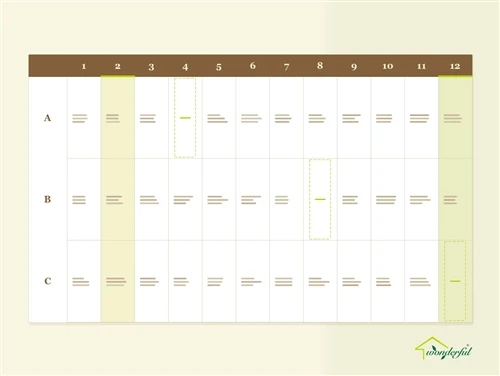
One column per field, one row per supplier, and the supplier's own wording kept in the cell rather than paraphrased. Paraphrasing is how a sheet becomes a summary of what the buyer understood, which is exactly the document you do not want when the order goes wrong.
Three habits make the sheet useful in an internal review:
- Mark every cell as stated, not stated, or needing confirmation. A blank cell is ambiguous; a labelled one is actionable.
- Keep a source column recording which document and which version each figure came from, so the sheet can be audited without reopening three PDFs.
- Do not score or average until every field is either filled or marked. A weighted score computed over half a sheet is a precise answer to the wrong question.
Which Columns Do You Add Beyond the Twelve?
A status column, a source column and a confirmation column - who confirmed a cell and when. The twelve fields tell you what to compare; these three tell you how much of the comparison is actually evidenced.
When Is a Bid Comparison Valid?
A bid comparison is valid when every quote sits on the same unit, the same label, the same tier and the same specification version, and when every cell that is not stated has been sent back rather than assumed. Until then you have a price list, not a comparison - and a shortlist built on a price list is a shortlist that will be re-opened.
What Else Do Buyers Ask About Quotations?
Buyers who want the shorter version of the ordering and sampling answers can use our wholesale buyer FAQs. The answers below follow the same rule as the rest of this article: state the field, then say what changes when it is missing.
What fields should be in an RFQ?
The twelve fields in this article: unit basis, price basis label, cost breakdown, quantity tier, packaging condition and unit packaging cost, tooling cost and ownership, sample cost and deductibility, lead-time basis, payment terms, currency, documentation and testing scope, and the specification version. An RFQ that names them comes back in a comparable shape.
What is the difference between a quotation and a proforma invoice?
A quotation is the supplier's offer of price and conditions, and it is the document you compare. A proforma invoice restates an agreed offer as a document a buyer can take forward for internal approval or payment. In comparison terms, the quotation is the input and the proforma invoice is its confirmed form.
What should a quotation include?
The twelve fields above, plus who issued it and when. The specification version matters most, because a quotation tied to no version is an offer for a product in general, and it cannot be lined up against a quote that names one.
How should quotes in different currencies be compared?
Convert every quote into the currency your team approves budgets in, and show the converted figure beside the original rather than instead of it. Record the basis and the date of the conversion in the sheet, so a reader can reproduce the number. Rank on the converted column only once both columns are visible.
Should tooling cost be compared separately from the unit price?
Yes - keep tooling on its own line and compare it as a one-off, not as part of the unit price. A quote that folds tooling into the unit price is not cheaper; it is bundled, and the bundling hides both the amount and who holds the tooling afterwards.
What should you do when a supplier will not give a cost breakdown?
Ask once in writing, in a fixed format you can line up across suppliers, and record the answer - or its absence - as a cell in the sheet. A quote with no breakdown can still be compared, but only on the fields that are stated, and the gap should stay visible until the order stage.
What Is the Bottom Line Before You Shortlist?
Three quotes on three different bases are not three prices; they are three bundles. Normalise the twelve fields, mark every cell that is not stated, and send the sheet back instead of filling the gaps yourself. The shortlist you build afterwards is the first one you can defend in an internal review - and the first one where the cheapest quote is actually the cheapest.
For buyers who want the twelve fields confirmed in writing against their own specification version, describe the programme at cso@wonderfulgroup.com.cn or +86 793 7410177, or send the specification version with your enquiry.
About the Manufacturer
Jiangxi Wonderful Household Co., Ltd. is a manufacturer based in Wuyuan, Jiangxi, China, founded in 1989. The company employs more than 700 people and produces around 30 million pieces a year, exporting to more than 50 countries. Its lines cover solid wood and wood-fiber composite kitchenware - cutting boards, serving boards, trays, bowls, utensils and kitchen storage - for importers, wholesalers, private-label buyers and food-service programmes. Certification work on the order covers FDA, LFGB, FSC and EUDR programmes, and testing can be arranged for the articles ordered.
Website: www.wonderfulkitchenware.com | Email: cso@wonderfulgroup.com.cn | Tel: +86 793 7410177