

Melamine Tableware Use, Care and Replacement Guide
Oct 14, 2026
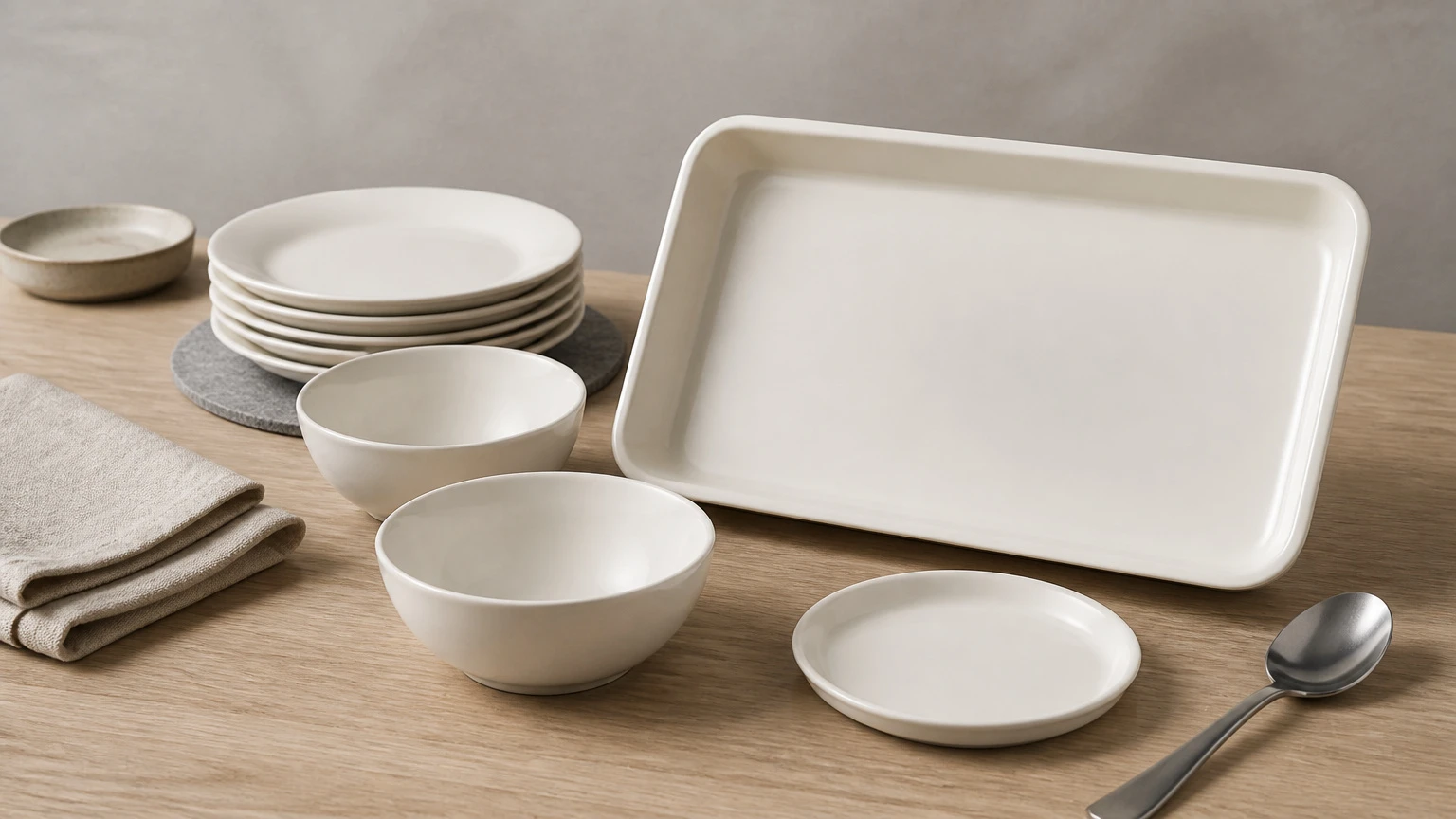
Melamine formaldehyde resin tableware is made for normal table service. It is not designed for microwave, oven or direct-heat use, and high-temperature sterilising sits outside its boundary. Washing, storage and replacement decisions decide service life, so the buyer's job is to hand the operator a written boundary rather than an assumption.
by Wonderful Household Editorial Team
A catering operator takes delivery of a new service line for a staff canteen. The buying decision is made and the specification sheet is filed. What decides whether the line is still in service a year later is not the price per piece? it is whether the kitchen team knows which tasks the ware was built for and which it was not. That knowledge rarely travels from the buyer to the wash-up area unless someone writes it down.
This guide sets out the boundary, the washing and storage routine, the withdrawal rule, and the handover pack that moves all of it to the operator.
Can You Microwave Melamine Tableware?
No. Melamine formaldehyde resin tableware is not designed for microwave use, and our production standard requires the packaging to carry a warning stating that the ware must not go into a microwave or a dishwasher. The same restriction can be applied as an in-mould marking, so the boundary travels with the article instead of living on a carton that is discarded at the loading bay.
What Does the Packaging Warning Cover?
The warning covers the two high-risk routines rather than the material in general: heating in a microwave, and machine washing. Both involve conditions that normal table service does not.
A warning printed only on the outer carton is the weakest form, because it leaves the building with the packaging. Where the article goes into a canteen, a hotel buffet or a chain account, specify in writing whether the boundary is carried on the packaging, in the mould, or on both? that choice sits with the buyer.
The buyer's question: if the carton is thrown away on day one, where does the boundary live after that?
Can Melamine Tableware Go in a Dishwasher?
No? machine washing is excluded for this line. Our production standard requires the packaging warning to state that the ware must not be used in a dishwasher, and the working alternative is hand washing: a soft cloth or sponge, mild detergent and warm water, a rinse, then drying before the ware returns to the stack.
What Does Hand Washing Look Like in Practice?
Hand washing works as a routine rather than a fallback. The risks come from shortcuts: abrasive pads that cut the surface, soaking that leaves ware standing in water for hours, and stacking wet ware so trapped moisture sits against a decorated face. The sequence is short? wash, rinse, dry, stack? and drying before stacking is the step that gets skipped.
The buyer's question: has anyone told the wash-up team that the machine on the wall is not for this ware?
What Temperature Can Melamine Tableware Handle?
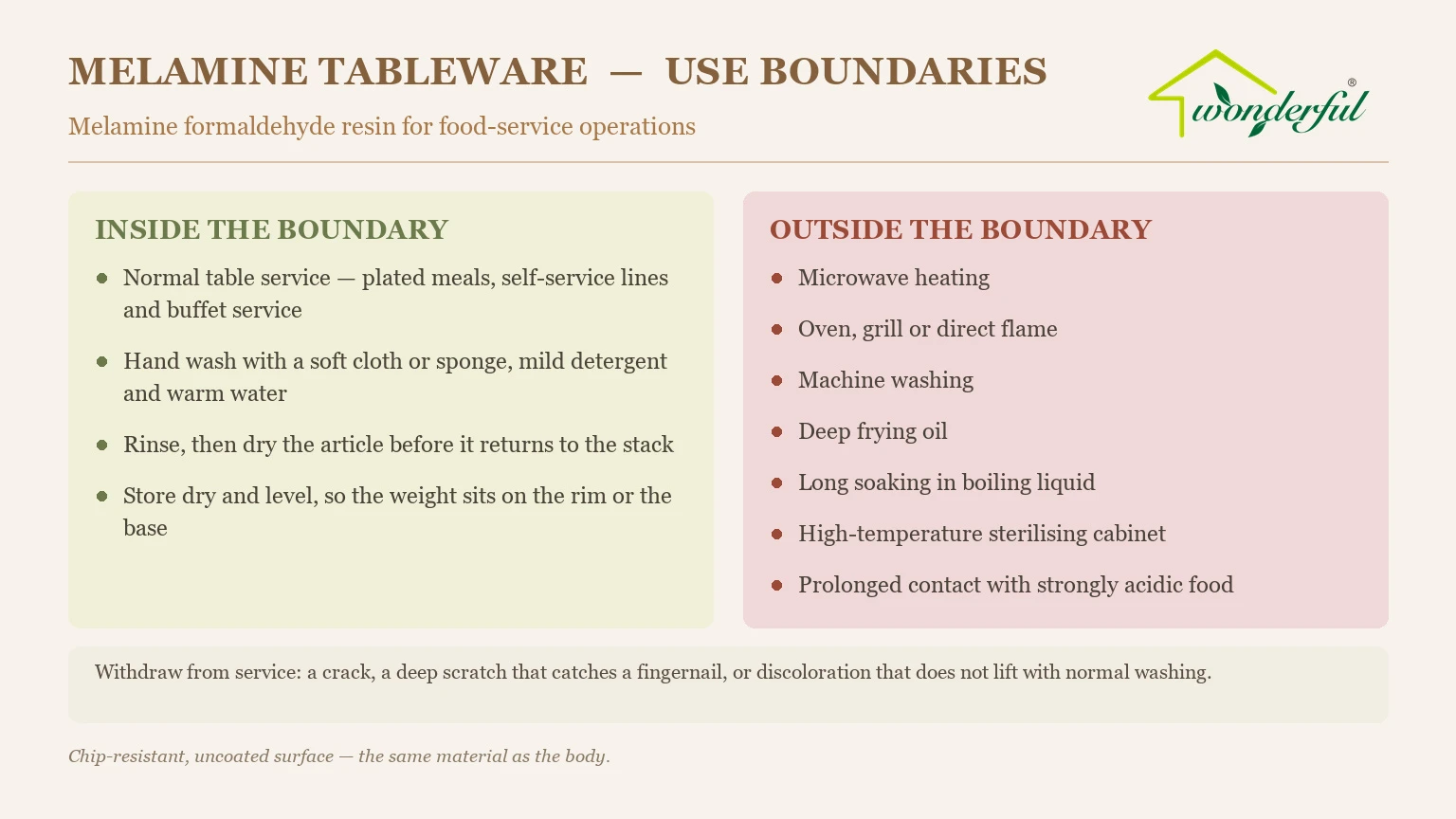
The boundary is normal table-service temperature, not cooking temperature. Confirm the figures for the article you buy against its test report rather than a general number, because the data belongs to the item ordered and can be provided on request. What the operator needs is the boundary itself: no microwave, no oven or direct heat, no frying oil, no high-temperature sterilising.
Which Uses Sit Inside the Boundary and Which Sit Outside?
| Use case | Position | What the operator should do instead |
|---|---|---|
| Normal table service - plated meals, self-service lines, buffet service | Inside the boundary | Use as intended |
| Microwave heating | Outside the boundary | Reheat in a vessel specified for microwave use; transfer to the melamine article for service |
| Oven, grill or direct flame | Outside the boundary | Keep the article away from all direct-heat cooking |
| Machine washing | Outside the boundary | Hand wash, rinse and dry before stacking |
| Deep frying oil or long soaking in boiling liquid | Outside the boundary | Use a vessel specified for that task; the article is for serving, not cooking |
| High-temperature sterilising cabinet | Outside the boundary | Follow the cleaning routine set out for this line |
| Prolonged contact with strongly acidic food | Outside the boundary | Serve and clear within a normal service cycle |
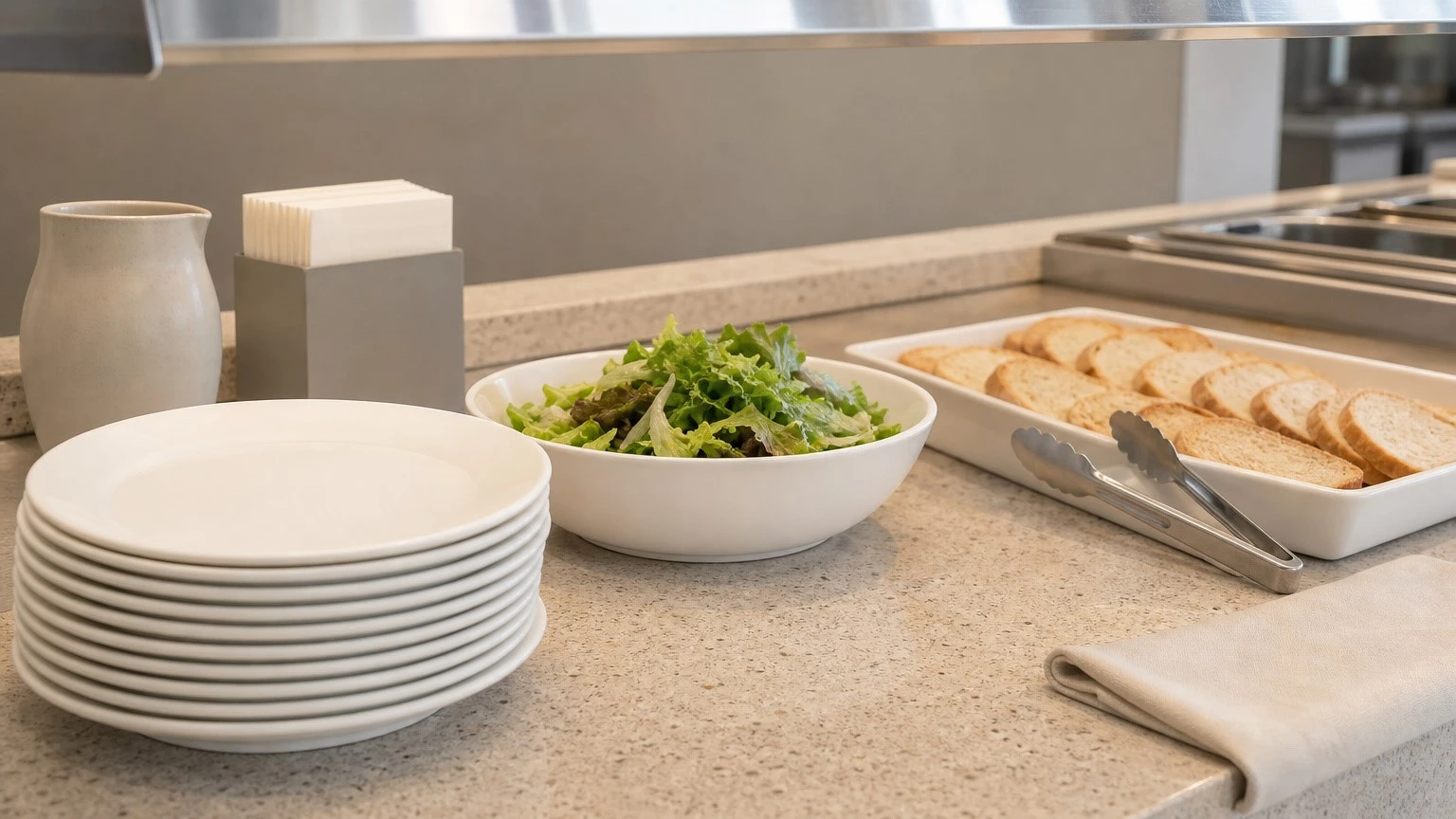
Most service failures do not come from an exotic use case. They come from a routine that was never written down, such as a new kitchen hand putting a stack through the machine because the machine was available.
The buyer's question: which of these rows would a new kitchen hand get wrong without being told?
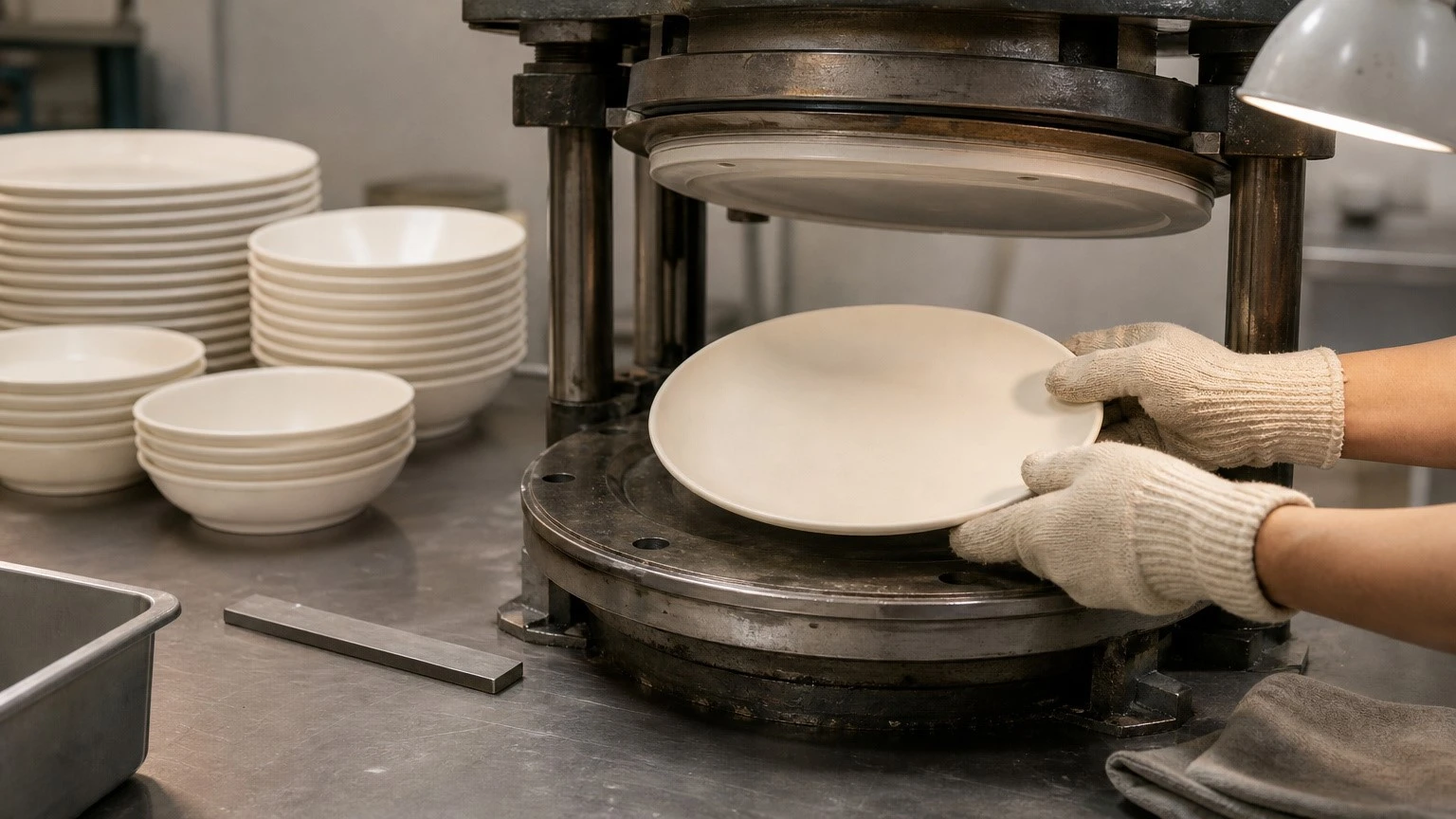
How Should Food-Service Staff Wash and Store Melamine Tableware?
Washing and storage are one routine in two halves. Wash with a soft cloth or sponge and a mild detergent in warm water, rinse, then dry the article before it returns to the stack. Abrasive pads, scouring powders and long soaking are the three habits that shorten a surface's life fastest, and all three are avoidable without extra equipment.
How Should the Ware Be Stored and Stacked?
Dry the ware first, then stack it on a level surface so the weight is carried by the rim or the base rather than by a decorated face. Where a stack is stored for a long period, keep it out of direct sunlight and away from heat sources, because ware that is not in daily rotation is easy to overlook and easy to damage.
A one-page instruction covering the wash sequence, the drying step, the stacking rule and the habits to avoid is enough for most kitchens, and it can be pinned where the wash-up happens rather than filed with the buying paperwork.
The buyer's question: does the operator have this routine in writing, or is it passed on verbally between shifts?
When Should Melamine Tableware Be Replaced?
Replace the article as soon as the surface shows cracks, deep scratches or discoloration. Those marks are the end of serviceable life, because a damaged surface is harder to clean and the damage does not repair itself. On this line the surface has no coating? it is the same material as the body? so there is nothing to refinish.
How Does the Surface Age?
Surface condition is a maintenance signal, not a cosmetic problem. A crack or a deep scratch changes how the article behaves in the wash: residue and moisture collect where a cloth cannot reach, and a decoration that has broken through is exposed as it was not before.
| What the operator sees | Decision | Why |
|---|---|---|
| Crack, chip through the body or visible split | Withdraw from service | The article can no longer be cleaned reliably |
| Deep scratch that catches a fingernail | Withdraw from service | Residue collects in the groove and cleaning does not reach it |
| Discoloration that does not lift with normal washing | Withdraw from service | The change is in the material, not on the surface |
| Light scuffing or a matt patch on a gloss article | Keep in service, monitor | Cosmetic change; check again at the next wash |
| Faded decoration with an intact surface | Keep in service, monitor | Report to the supplier if the change appears across a batch |
Replacement is decided by the surface, not by the calendar, so a stack washed carefully outlives one washed against the clock. A piece that fails any check is withdrawn, and the rest of the stack is unaffected.
The buyer's question: does the operator have a rule for withdrawal, or does a damaged piece stay in service until someone complains?
What Should a Buyer Hand Over to the End Operator?
A handover pack needs to be specific about which restrictions apply to the article supplied, not long.
- The use boundary, in one sentence. Normal table service only; no microwave, no oven or direct heat, no frying oil, no high-temperature sterilising.
- The washing routine. Hand wash with a soft cloth and mild detergent, rinse, dry before stacking; no machine washing, no abrasive pads, no long soaking.
- The withdrawal rule. Cracks, deep scratches or discoloration mean the article comes out of service.
- The marking position. Whether the caution is carried on the packaging, in the mould or both? and where a food-contact marking is wanted on the article itself, that decision is made by the buyer and applied through the mould specification.
- What the supplier can issue for the order. Where a channel requires a declaration or a material statement, agree in writing what can be provided for the specific articles ordered rather than assuming a general document covers them.
| Where the pack sits | What it should contain |
|---|---|
| With the buying file | Specification, quantities, packing format, the agreed marking position |
| In the kitchen | Use boundary, washing routine, withdrawal rule |
| With the training material | The same routine in the operator's own language, for new starters |
Orders for buffet and catering programmes often arrive with this question attached, which is why the range we supply for that channel? melamine tableware for buffet and catering? is specified with the care notes rather than as a price list alone. Buyers who want to see how the boundary sits alongside the rest of the range can review commercial melamine dinnerware and the full range of kitchenware we manufacture, read our FAQ page, or send your specification.
The buyer's question: if the operator has to guess, which guess would cost the most?
What Else Do Buyers and Operators Ask Most Often?
1. Can melamine tableware go in the oven?
No. Oven, grill and direct-flame use sit outside the boundary set for this line. Reheat elsewhere and transfer the food to the melamine article for service.
2. Can melamine tableware hold boiling water or hot oil?
Hot oil is outside the boundary, and long soaking in boiling liquid is not a use this line is built for. Normal service at serving temperature is what the ware is designed around.
3. Can melamine tableware be sterilised?
High-temperature sterilising cabinets sit outside the boundary. The routine for this line is hand washing with a soft cloth and mild detergent, a rinse, and drying before the ware is stacked.
4. Can melamine tableware hold acidic food?
Normal service is fine. Prolonged contact with strongly acidic food is outside the boundary, which means serving and clearing within a normal service cycle rather than leaving food standing in the article.
5. When should melamine tableware be replaced?
As soon as the surface shows cracks, deep scratches or discoloration. The test is the surface, not the age of the piece, so a stack handled carefully stays in service longer.
6. How long does melamine tableware last?
Service life depends on how the ware is washed, stacked and used, and no published durability figure would apply across kitchens. Judge each piece by its surface condition.
7. How should stains be removed?
Start with the specified routine: a soft cloth or sponge, mild detergent and warm water, then dry before stacking. Where a mark does not lift with normal washing, treat it as a change in the material rather than as surface dirt.
8. What documentation can Wonderful Household provide for our order?
We confirm in writing which documents can be issued for the specific articles ordered, including a declaration or a material statement where your market requires one, so the paperwork is matched to your order rather than issued as a general document.
9. Can Wonderful Household arrange testing for our order?
Yes. Testing can be arranged for your order where your market requires reports, and the scope is agreed before production so that what is tested matches what is shipped, including decoration where that is part of the specification.
10. Can Wonderful Household supply ware for buffet and catering programmes?
Yes, and this is where the care notes matter most. Melamine formaldehyde resin is one of the lines we manufacture for food-service programmes, alongside solid wood and wood-fiber composite.
What Is the Bottom Line for Buyers and Operators?
The boundary is short enough to fit on a carton label and specific enough to settle most questions before the ware reaches a wash-up area: normal table service, no microwave, no oven or direct heat, no frying oil, no high-temperature sterilising, hand wash and dry, and withdraw the article when the surface shows cracks, deep scratches or discoloration. The remaining work is transfer. A buyer who writes those lines into the handover pack? and confirms in writing which caution method and which documents apply to the order? stops a specification from becoming an assumption, and gives the operator a rule to follow on the shift where nobody is reading the buying file.
About the Manufacturer
Jiangxi Wonderful Household Co., Ltd. was established in 1989 in Wuyuan, Jiangxi Province, and manufactures solid wood, wood-fiber composite and melamine tableware for importers, wholesalers, private-label buyers and food-service programmes. The company employs more than 700 people, produces around 30 million pieces a year, and exports to more than 50 countries. Where your market requires food-contact testing, such as FDA or LFGB programmes, testing can be arranged for your order, and social compliance documentation including BSCI programmes can be discussed against your channel requirements.
Website: www.wonderfulkitchenware.com| Email: cso@wonderfulgroup.com.cn| Tel: +86 793 7410177