

Pre-Shipment Inspection for Wooden Kitchenware: QC Checklist
Sep 27, 2026
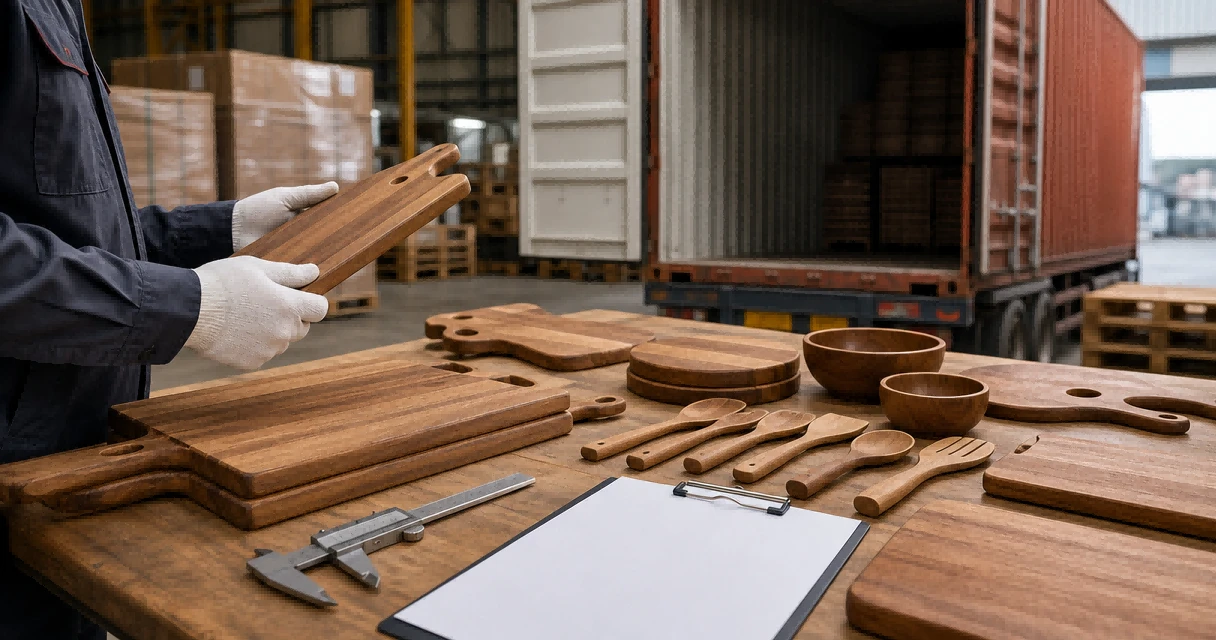
The short answer: Pre-shipment inspection (PSI) is a quality check performed on finished goods before loading? typically by an independent third party? covering appearance, color consistency, dimensions, moisture, packaging, markings, and loading condition. For wooden kitchenware imports, PSI is the moment where "the sample looked great" becomes "the container is verified." The standard rule: your sample proves the factory can make it; PSI proves the factory did make it? at batch scale, to specification.
The direct answer to the checklist question: before your container leaves China, verify appearance and color consistency across the batch, dimension tolerance against specification, moisture content for wooden products, packaging and retail readiness, labeling and compliance markings, and the loading condition itself. A qualified supplier supports PSI as normal practice; a supplier that resists it is telling you something.
What Pre-Shipment Inspection Is? and When to Run It
PSI is an inspection of the finished, packed order at the factory or warehouse, before the container is loaded. It is distinct from a factory audit: an audit evaluates the factory's systems; PSI evaluates one specific batch of goods. For wooden kitchenware, the two complement each other? the audit tells you whether the factory can control quality, and PSI tells you whether this shipment is controlled.
When to run it: after production is complete and before loading. For first orders, run PSI without exception; for repeat orders, run it at minimum periodically and always after any change? new finish, new packaging, new production line, or a rushed production cycle.
Who runs it: ideally an independent third-party inspection company. The factory's own inspection report has value as a baseline, but independence is the point: an inspector paid by neither side reports what the goods look like, not what the seller hopes.
What PSI Checks for Wooden Kitchenware
The inspection checklist for wooden kitchenware maps to the properties buyers actually care about. Each check answers a specific risk:
| Check | What the Inspector Verifies | Risk It Catches |
|---|---|---|
| Appearance | Surface defects, scratches, finish uniformity | Damaged or rejected goods at retail |
| Color consistency | Color match within and across batches | Mixed-looking ranges on the shelf |
| Dimensions | Thickness, length, width against specification | Packaging and display failures |
| Moisture content | Wood moisture at acceptable levels | Post-sale warping and cracking |
| Packaging | Carton quality, inner packing, retail-ready state | Transit damage and poor unboxing |
| Markings and labels | Compliance marks, barcodes, product labels | Customs holds and compliance failures |
| Loading | Container loading condition and carton count | Shortage, damage in transit, disputes |

Wooden Products Need Two Checks Other Categories Skip
Wood is a natural material, and two PSI items deserve special attention in wooden kitchenware:
Moisture content. Wood that ships with uncontrolled moisture is a warranty claim waiting to happen: it warps, cracks, or finishes blooming after arrival in a different climate. The inspection verifies moisture is at the level the factory's drying process targets? ask the inspector to report the reading and compare it with the specification agreed at sampling.
Color consistency. Natural wood varies, and retail buyers need ranges that look coherent. The inspection samples across the batch to confirm color stays within the agreed tolerance? not identical, which natural material cannot promise, but consistent, which retail requires. Agree the tolerance at sampling, not at inspection.
Factory Inspection Report vs Third-Party Inspection
| Factor | Factory Report | Third-Party PSI |
|---|---|---|
| Independence | Seller's own team | Independent of both parties |
| Depth of detail | Varies by factory | Standardized checklist |
| Credibility in disputes | Questioned | Generally accepted |
| Cost | Included | Modest per inspection |
| Best use | Production baseline | Order acceptance, first orders, disputes |
The professional sequence is both: the factory's own records show the process was controlled, and the third-party report confirms the goods before loading. For first orders, never skip the third-party step to save a modest fee? the report is the difference between a clean arrival and a dispute conducted across an ocean.
What Happens When PSI Finds Problems
A failed inspection is not the end of the order? it is the start of the correction process. The professional handling sequence:
- Hold the goods. The order does not load until the issue is classified and a decision is made.
- Classify the finding. Is it a minor cosmetic issue, a spec deviation, or a systemic defect?
- Agree the remedy. Options: rework at the factory, price adjustment for acceptable deviations, replacement of defective units, or? for systemic failure? cancellation and re-production.
- Confirm the timeline. Rework takes time; confirm the new completion date and its impact on your shipping window before approving.
- Re-inspect. The corrected goods are re-inspected before loading; the re-inspection result becomes the shipping baseline.
The terms that govern this process? rework responsibility, cost allocation, and remedy options? belong in your purchase agreement, agreed before production, not invented after a failed inspection. A supplier that discusses these terms openly at contracting stage is a supplier that expects to pass inspection.
The First-Time Importer's QC Calendar
For buyers new to importing wooden kitchenware from China, quality control is a calendar, not an event:
| Stage | QC Action |
|---|---|
| Sampling | Agree specifications and color/moisture tolerances in writing |
| Production | Factory provides progress updates and its own inspection records |
| Pre-shipment | Book third-party PSI on the finished batch |
| Loading | Confirm the container matches the inspected goods |
| Arrival | Check the first delivery against the PSI report |
The pattern: every stage produces a document, and the documents stack into a file that protects you at every point of dispute.
The Buyer's Downloadable PSI Checklist
Save this checklist and use it as the basis for your inspection request:
- □ Inspection booked after production complete, before loading
- □ Third-party inspector appointed for first orders
- □ Specification sheet shared with the inspector (dimensions, finish, packaging)
- □ Appearance and surface defects checked across the batch
- □ Color consistency sampled within agreed tolerance
- □ Dimensions verified against specification
- □ Moisture content reported and compared with specification
- □ Packaging verified for quality and retail readiness
- □ Markings, barcodes, and compliance labels verified
- □ Loading supervised and carton count confirmed
- □ Report received before the container departs
- □ Failed items: remedy agreed and re-inspection booked
How to Book a Pre-Shipment Inspection
Booking a PSI follows a simple sequence. Confirm the inspection date with the factory once production is complete? inspections typically happen at the factory or its warehouse, timed before packing is finalized for loading. Share the specification sheet with the inspector: dimensions, finish, packaging requirements, and the tolerances agreed at sampling. Specify the sampling approach? a professional inspector draws a meaningful sample across the batch rather than checking a handful of pieces near the door. Ask for the report format and delivery timing in advance; the report should reach you before the container departs, so any finding can be acted on while the goods are still in the supplier's control. And book early: in peak season, inspection companies run at capacity like everyone else, and an unbooked inspection means an unverified shipment.
Making PSI Part of Your Buying Process
The importers who sleep well at night treat PSI as a fixed step, not an option. The pattern that works: PSI on every first order without exception; PSI on repeat orders at a defined frequency? every shipment, every other shipment, or on a risk basis after any process change; and PSI always when the order is time-critical, because a late but verified shipment is worth more than an early one that fails at destination. The cost discipline is simple: the inspection fee is a small fraction of the container value, and the claims, disputes, and return processes it prevents cost multiples of the fee. Buyers who integrate PSI into the buying process stop treating quality as trust and start treating it as verification? which is what professional importing means.
FAQ
What is pre-shipment inspection for kitchenware imports?
A quality check on the finished, packed order before loading? appearance, color, dimensions, moisture, packaging, markings, and loading? typically performed by an independent third party, distinct from a factory audit of the factory's systems.
How do I check wooden cutting board quality before shipment?
Request a pre-shipment inspection covering surface appearance, color consistency within the batch, dimension tolerance against spec, moisture content, packaging, and labeling? and require the report before the container loads.
What QC checks should buyers request from a wood kitchenware supplier?
At minimum: moisture content at drying specification, dimension tolerance, surface and finish uniformity, color consistency, packaging and retail readiness, and compliance markings? with the factory's own inspection records available as a baseline.
What if the inspection fails?
Hold the goods, classify the finding, and apply the remedy agreed in your purchase terms? rework, price adjustment, or replacement? then re-inspect before loading. The terms belong in your agreement before production, not after the failure.
Does Jiangxi Wonderful Household Co., Ltd. support pre-shipment inspection?
Yes? as a manufacturer founded in 1989 in Wuyuan, Jiangxi, the company maintains its own three-level inspection records and welcomes third-party pre-shipment inspection on every order. Request inspection terms at cso@wonderfulgroup.com.cn.
About the Manufacturer
Jiangxi Wonderful Household Co., Ltd. is a wood kitchenware manufacturer based in Wuyuan, Jiangxi, China, founded in 1989. With 700+ employees, an annual production capacity of 30 million pieces, and a 43,333 m虏 facility, we manufacture solid wood and wood-fiber composite kitchenware for retailers and wholesalers in 50+ countries, maintaining our own inspection records and supporting third-party pre-shipment inspection on all orders. Contact us at cso@wonderfulgroup.com.cn or +86 793 7410177, or visit our website at www.wonderfulkitchenware.com.
by Wonderful Household Editorial Team