

What are the principles of kitchen utensils
Feb 03, 2024
Principles of Wooden Kitchen Utensils: A Wholesale Buyer's Guide
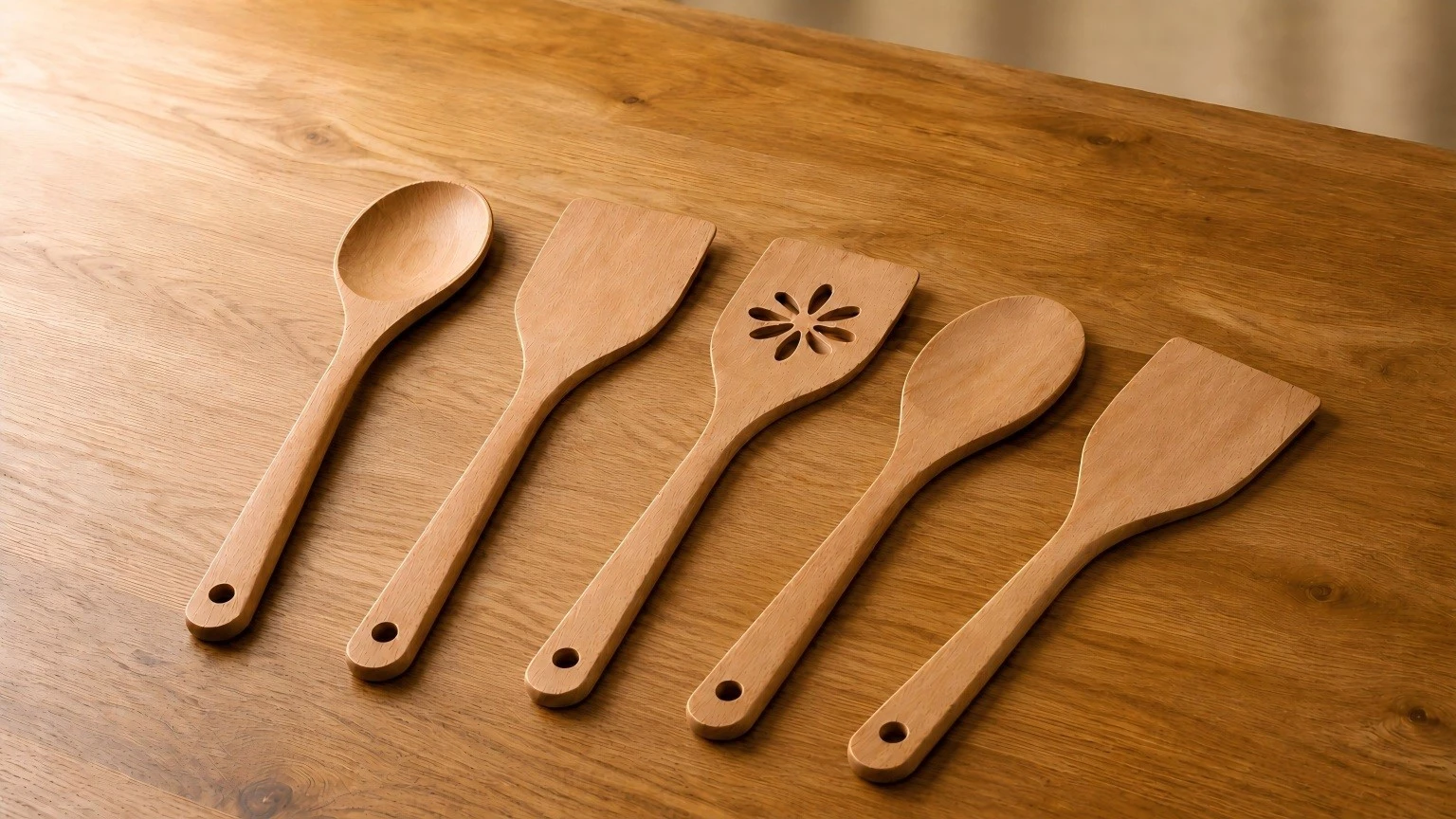
The short answer: Four principles govern kitchen utensils? hygiene, fire safety, ergonomics, and durability of materials. For wooden kitchen utensils, hygiene means food-contact-safe finishes and easy cleaning; fire safety means keeping wood away from open flame and high heat; ergonomics means balanced weight, comfortable grips, and efficient motion; and material durability means choosing solid wood or wood fiber composite construction that survives commercial use. Buyers evaluating wooden kitchen tools for wholesale programs should check all four against the supplier's materials, finishing, and quality control.
Why the Four Principles Matter in Procurement
Kitchen utensils are not decorative items? they are daily-use tools in commercial kitchens, catering operations, and households. When a buyer sources wooden kitchen utensils in bulk, the four principles translate directly into product specifications, compliance requirements, and replacement-cost calculations. A utensil that fails on hygiene creates food-safety risk; one that fails on ergonomics creates staff fatigue; one that fails on material durability creates repeat purchase costs. Evaluating all four before ordering prevents problems that surface only after the product is in service.
1. Hygiene: Food-Contact Safety First
The hygiene principle covers what touches food and how easily the surface can be kept clean. For wooden kitchen utensils, three factors determine hygiene performance:
- Finish quality: smooth, sealed surfaces resist moisture absorption and bacteria buildup.
- Food-contact compliance: finishes and materials must meet the compliance framework of the destination market? FDA for the US, LFGB for EU-facing programs.
- Cleanability: utensils that can be hand-washed, dried, and stored properly support routine hygiene in commercial settings.
Wood fiber composite utensils add a practical hygiene advantage at volume: the dense, uniform surface is easy to keep clean, and the material is suitable for everyday washing routines in busy kitchens. Solid wood utensils deliver the same food-contact performance when finished correctly. In both cases, buyers should request compliance documentation from the supplier rather than relying on logos on a website. For a closer look at the material families behind this principle, see our wood fiber composite cutting boards and wooden cooking spoons.
2. Fire Safety: Heat Limits of Wood
Wood is not fireproof? the fire-safety principle means knowing the limits and designing the product line accordingly:
- Keep wood away from direct flame and high-heat surfaces. Wooden spoons and spatulas are for stirring and serving, not for resting in a hot pan.
- Match the tool to the task: use wood for gentle heat environments (stirring, serving, mixing) and metal for extreme-heat tasks.
- Train staff and label packaging: commercial buyers should include heat-use guidance in staff training and packaging to reduce misuse.
This is a compliance-neutral operational principle: it is not a material defect, but a usage boundary. Wholesale buyers can manage it through clear product documentation and staff onboarding.
3. Ergonomics: Weight, Grip, and Motion
Ergonomics determines whether a tool is comfortable over a full shift. In commercial kitchens, utensils are used hundreds of times a day, so ergonomic factors directly affect staff efficiency and fatigue:
- Balanced weight: a well-balanced spoon or spatula reduces wrist strain.
- Comfortable grips: rounded, sanded handles fit the hand without sharp edges.
- Efficient motion: the length and shape of the tool should match the cooking vessel and task.
For buyers, ergonomics is a specification you can request: handle dimensions, edge finishing, weight ranges, and balance points can all be defined in an OEM/ODM brief.
4. Material and Craftsmanship: The Durability Principle
The fourth principle is the material itself. Wooden kitchen utensils span two main families, each suited to different program tiers:
| Material | Position | Best suited for | Labeling requirement |
|---|---|---|---|
| Solid wood (acacia, walnut, beech) | Premium line | Branded programs, retail presentation, high-end hospitality | Label as solid wood with the species |
| Wood fiber composite | Volume line | High-volume wholesale, catering, everyday use | Label as a composite, never as solid wood |
| Bamboo | Comparison category | Budget-oriented lines | Label as bamboo |
The durability principle also covers finishing: proper drying of solid wood, moisture control, and food-safe sealing determine how long a utensil lasts in service. Buyers should ask suppliers about drying processes and finish quality during qualification. To see how these material families perform across a full serving line, compare our acacia wood trays and extra-long serving boards.
How the Principles Guide a Wholesale Decision
A practical way to apply the four principles is to score each shortlisted product against them:
- Request the material specification and food-contact compliance documents (hygiene).
- Confirm heat-use guidance and packaging warnings (fire safety).
- Request handle dimensions and weight from the product sheet or a sample (ergonomics).
- Order a sample and check the finish, grain, and construction quality (durability).
Suppliers that can document all four principles? material compliance, usage guidance, ergonomic specs, and finishing quality? are easier to plan around for repeat programs.
Frequently Asked Questions
1. What are the principles of kitchen utensils?
The four principles are hygiene, fire safety, ergonomics, and material durability. For wooden utensils, hygiene covers food-contact-safe finishes and cleanability; fire safety covers keeping wood away from flame and high heat; ergonomics covers weight, grip, and motion; and durability covers material choice, drying, and finishing.
2. Are wooden kitchen utensils food safe?
Yes, when they are made with food-contact-compliant materials and finishes. Suppliers serving export markets hold FDA and LFGB compliance for food-contact wood products. Buyers should request the documentation rather than relying on claims.
3. What is the minimum order quantity (MOQ) for wholesale orders from Wonderful Household?
The MOQ is 500 pieces per item for standard wooden kitchenware products. Custom orders and mixed programs are discussed during qualification, and terms are confirmed in writing before production.
4. Does Wonderful Household support OEM/ODM customization of kitchen utensils?
Yes. OEM/ODM covers custom sizes, handle shapes, edge profiles, branding, and packaging. Samples are produced before bulk orders? typically within about 10 working days? and production lead time is around 45 days depending on order size.
5. What food-contact certifications does Wonderful Household hold?
Wonderful Household manufactures food-contact wood kitchenware under FDA, LFGB, FSC, and EUDR compliance. Certification documents are available for review during business discussions.
About Wonderful Household
Jiangxi Wonderful Household Co., Ltd. is a premium wood kitchenware manufacturer based in Wuyuan, Jiangxi, China, founded in 1989. With 700+ employees and an annual production capacity of 30 million pieces, we supply OEM/ODM and private-label wood kitchenware to retailers and wholesalers in 50+ countries. Our product range includes cutting boards, serving trays, salad bowls, pepper grinders, and wooden utensils, all manufactured with FDA, LFGB, FSC, and EUDR compliance. To discuss wholesale or OEM requirements, contact us at cso@wonderfulgroup.com.cn or +86 793 7410177, or visit www.wonderfulkitchenware.com.
by Wonderful Household Editorial Team


