

What Is A Chopping Board
Feb 01, 2024
What Is a Chopping Board? A Complete Buying Guide
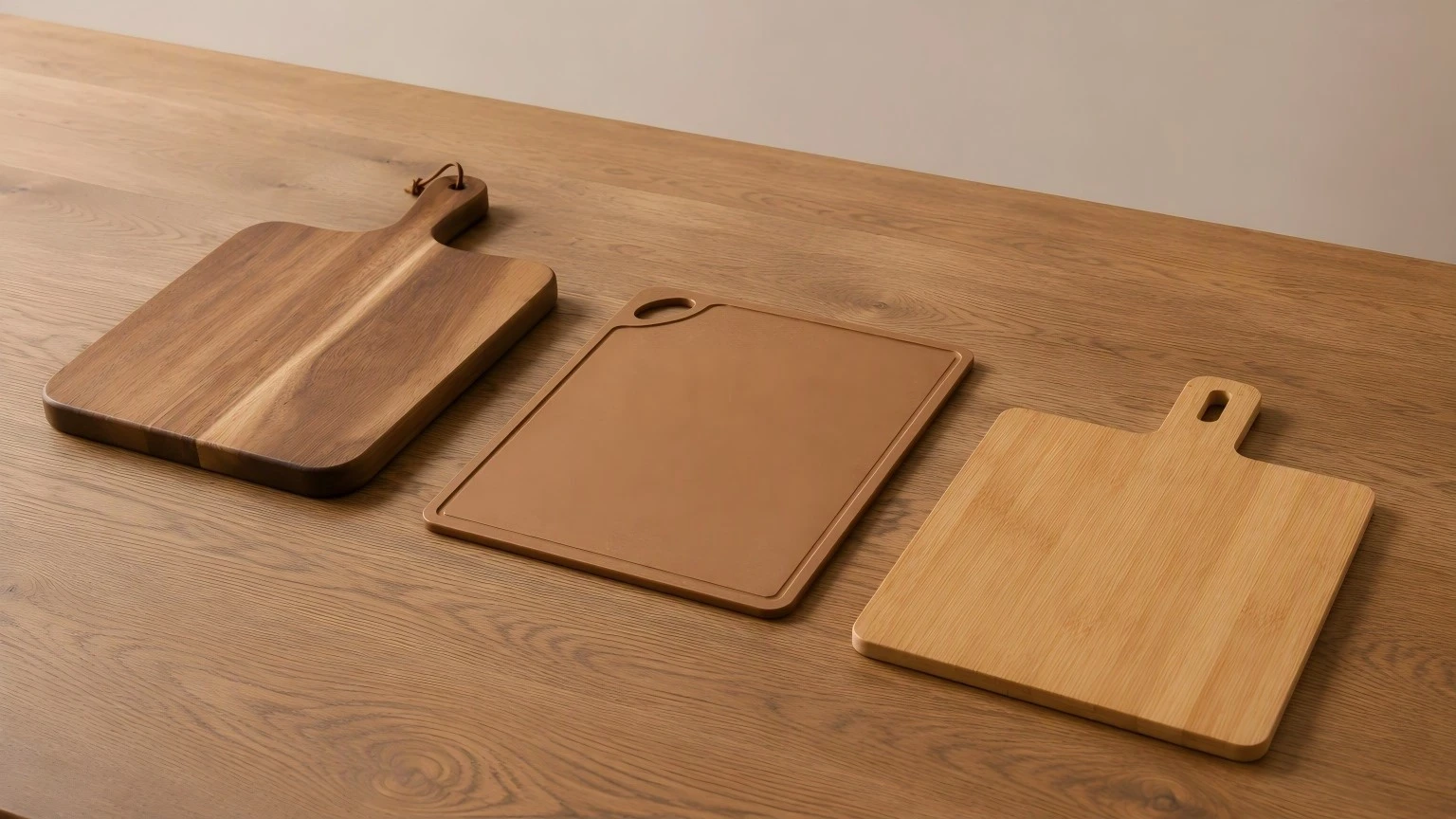
The short answer: A chopping board (also called a cutting board) is a flat, durable surface used to cut, chop, and prepare food. The best material for a chopping board is wood? either solid wood for premium programs or wood fiber composite for high-volume use? because both protect knife edges, resist deep scoring, and are food-contact safe when finished and maintained correctly. This guide covers the definition, the main material families, how to choose, and how to care for boards, written for wholesale buyers planning a cutting board program.
Chopping Board vs Cutting Board: Same Product, Two Names
"Chopping board" and "cutting board" describe the same product. "Chopping board" is the common term in British English; "cutting board" is the standard term in American English. Both refer to a flat board for food preparation. In product catalogs and wholesale listings, the two terms are interchangeable? buyers should search both when comparing suppliers and pricing.
The Main Material Families
Chopping boards are made from four main material families, and each behaves differently in commercial and retail use:
| Material | Durability | Knife-friendliness | Food-contact | Typical position |
|---|---|---|---|---|
| Solid wood (acacia, walnut, beech) | High, with proper care | Excellent - gentle on edges | FDA/LFGB-compliant finishes | Premium retail and branded programs |
| Wood fiber composite | High, uniform surface | Good, dense but edge-friendly | FDA/LFGB-compliant | Volume wholesale, catering, everyday lines |
| Bamboo | Medium - harder surface, can dull knives faster | Moderate | Compliant when finished | Budget-oriented lines (comparison category) |
| Plastic (polyethylene etc.) | Medium - deep scoring over time | Moderate | Varies by grade | Utility/commercial backup boards |
Note that no single material dominates the market by itself. The practical split is by program: solid wood and wood fiber composite cover the premium and volume lines of wood-based programs, while bamboo is a widely available alternative and plastic serves utility roles. For buyers building a wood-focused assortment, solid wood and wood fiber composite are the two families to plan around.
Types of Chopping Boards
Beyond material, boards vary by construction and purpose:
-
Edge-grain boards: classic strips glued edge-to-edge; durable and affordable.
-
End-grain boards: premium construction that is gentle on knives; higher cost.
-
Boards with juice grooves: capture meat juices during carving and serving.
-
Boards with handles: easy hanging and carrying for commercial kitchens.
-
Multi-piece sets: color-coded or size-graded sets for task separation.
Wholesale buyers typically combine one or two constructions with custom sizes and branding under OEM/ODM programs.
How to Choose a Chopping Board for Your Program
- Match material to use: solid wood for presentation and branded lines; wood fiber composite for volume and everyday programs.
- Set thickness for the task: thicker boards resist warping in heavy commercial use; thinner boards suit light prep and storage.
- Confirm compliance: request FDA and LFGB documentation for food-contact boards, plus FSC and EUDR for wood sourcing where required.
- Order samples: verify grain, finishing, and edge quality before committing to bulk.
For a deeper look at board selection, see our guide on how to choose a cutting board and the wood fiber composite cutting board product family.
How to Care for a Chopping Board
- Hand-wash with warm water and mild soap; dry upright.
- Do not soak boards in water or run them through the dishwasher unless the material is rated for it.
- Oil solid wood boards periodically with food-grade mineral oil to maintain the finish.
- Replace or resurface boards when scoring becomes deep? deep grooves can harbor bacteria.
- For detailed care steps, see our cleaning guide on keeping cutting boards clean.
Frequently Asked Questions
1. What is a chopping board?
A chopping board is a flat, durable surface used for cutting, chopping, and preparing food. It is also called a cutting board, especially in American English.
2. What is the best material for a chopping board?
For wood-based programs, solid wood is best for premium lines (knife-friendly, presentation quality) and wood fiber composite is best for high-volume lines (uniform, durable, easy to maintain). Both are food-contact safe with compliant finishes.
3. Are chopping boards food safe?
Yes, when made with food-contact-compliant materials and finishes. Suppliers serving export markets hold FDA compliance (US) and LFGB compliance (EU). Buyers should request documentation during qualification.
4. What is the MOQ for wholesale chopping boards from Wonderful Household?
The MOQ is 500 pieces per item for standard cutting board products. Custom sizes, shapes, and branding are discussed during qualification.
5. Does Wonderful Household offer custom cutting boards under OEM/ODM?
Yes. OEM/ODM covers custom sizes, edge profiles, laser engraving or branding, and packaging. Samples are produced before bulk orders? typically within about 10 working days? with production lead time around 45 days.
6. What certifications does Wonderful Household hold for cutting boards?
Wonderful Household manufactures food-contact cutting boards under FDA, LFGB, FSC, and EUDR compliance. Certification documents are available for review during business discussions.
About Wonderful Household
Jiangxi Wonderful Household Co., Ltd. is a premium wood kitchenware manufacturer based in Wuyuan, Jiangxi, China, founded in 1989. With 700+ employees and an annual production capacity of 30 million pieces, we supply OEM/ODM and private-label wood kitchenware to retailers and wholesalers in 50+ countries. Our product range includes cutting boards, serving trays, salad bowls, pepper grinders, and wooden utensils, all manufactured with FDA, LFGB, FSC, and EUDR compliance. To discuss wholesale or OEM requirements, contact us at cso@wonderfulgroup.com.cn or +86 793 7410177, or visit www.wonderfulkitchenware.com.
by Wonderful Household Editorial Team


